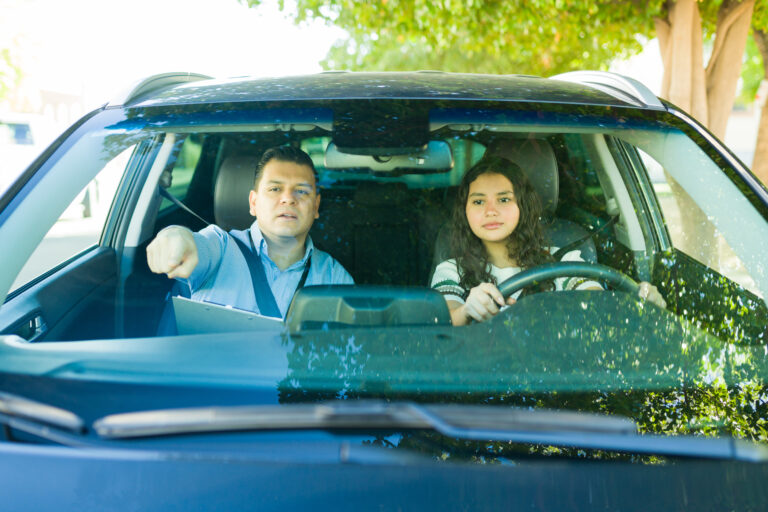
The first time your teen presses the gas pedal while you’re in the passenger seat, your heart does something strange.
Your hands instinctively hover near an imaginary brake pedal that doesn’t exist, and you suddenly become hyper-aware of every mailbox that looks like it’s leaning just an inch too far into the road.
Teaching your teen to drive sometimes feels like a slow-motion action movie where you’re the sidekick who didn’t sign up for the stunts.

The real challenge isn’t just explaining how to drive; it’s trusting someone who still forgets to put their socks in the hamper to handle two tons of moving metal.
The pressure builds quickly, and if you’re not careful, a minor correction can turn into a tense silence that lasts for three days.
The way you navigate these lessons can either build a confident driver or leave you both needing a very long nap.
The good news is that this doesn’t have to end in a dramatic roadside argument or one (or both) of you in tears.
With a little structure, a lot of intentional patience, and a solid plan you can turn these sessions into something steady and bonding.
Let’s start with what needs to happen before you even pull out of the driveway.
What’s The Best Way To Teach A Teen To Drive?
Start With the Emotional Foundation
- Refresh your own skills first
Before you sit in that passenger seat, take a moment to realize you’ve likely developed a few “creative” driving habits over the last ten years that an instructor would hate.
Review the actual right-of-way rules and proper parking techniques so you aren’t accidentally teaching them the wrong thing.
- Model humility and lifelong learning
If you realize you’ve forgotten exactly who goes first at a four-way stop, admit it openly to your teen rather than trying to fake your way through it.
Showing them that you are still a student of the road helps take the pressure off them to be a perfect driving prodigy from day one.

- Do a five-minute calming session before you begin
Whether it’s a quick prayer, some deep breathing, affirmations, or a short pep talk to remind yourself that you love this child, you need to neutralize your own anxiety before you get into the car.
Setting a calm tone helps your teen view the session as a learning experience rather than a high-stakes performance.
- Talk about your struggles more than your successes
Tell them about the time you accidentally hopped a curb or failed your first parallel parking attempt because you forgot which way to turn the wheel.
Normalizing the fact that everyone starts a little awkward helps remove the shame they might feel when they inevitably hit the brakes with the force of a thousand suns.

- Commit to being patient
Try to remember exactly how it felt to be sixteen and terrified of a simple left turn into traffic.
When they make a mistake (which they will), focus on coaching them through the correction with a level head rather than letting out a dramatic gasp that makes them jump three inches out of their seat.
Create a Safe and Structured Environment
- Find a safe spot to practice
Start in a massive, empty parking lot on a Sunday morning, where the only thing they can possibly hit is a stray shopping cart.
Once they have mastered the basics of starting and stopping without giving you whiplash, you can slowly graduate to quiet residential streets during low-traffic times.

- Take it slow through clear phases
Don’t jump from the parking lot to the highway in a single afternoon unless you have a death wish or very high-quality insurance.
Break the journey into logical steps, moving from neighborhood turns to busier roads, and eventually to night driving and rain once they have actually mastered the art of staying in their lane.
- Make a plan for your lessons
Before you even turn the engine on, decide exactly which skill you are going to focus on for that specific session.
Reviewing what they improved on last time and identifying what still needs practice makes the lesson feel productive rather than aimless.
Teach Beyond the Wheel
- Narrate your decisions while you drive
The next time you are the one behind the wheel, explain your thought process out loud to your teen like you’re a commentator for a very boring race.
Tell them why you are slowing down early for a light or how you are scanning an intersection for distracted drivers so they can see defensive driving in action before they try it themselves.

- Explain clearly and repeat everything
Give your instructions at least three blocks before you want them to actually turn the wheel.
Use simple, direct language and repeat key safety principles consistently so they become second nature to your teen before they ever have to navigate a busy downtown area.

Track Progress Without Creating Pressure
- Keep a dedicated driving notebook
Write down the skills you practiced, any specific weaknesses that popped up, and the small wins that didn’t involve you clutching the dashboard for dear life.
Keeping a log helps you remember exactly where you left off, so you aren’t stuck repeating the same parking lot drills for three months straight.

- Encourage your teen to keep notes as well
Letting them track their own progress builds a sense of accountability and allows them to see how far they’ve come since those first jerky starts.
It is also a total game-changer for memory, as writing down the steps helps their brain cement new habits much faster.
Because life happens, a good set of notes ensures they can keep learning even when you need a night off.

Set Driving Rules Early
- Establish passenger and phone policies
Before they ever drive solo, make it clear that the phone stays out of sight and the number of friends in the car stays at zero until they have some real experience.
Setting these boundaries early reduces future anxiety and reinforces the idea that driving is a serious responsibility, not a social hour.

- Define curfew expectations and consequences
Create a clear agreement on when the car needs to be back in the driveway and what exactly happens if safety rules or curfews are ignored.
Having these “house laws” in writing prevents arguments later and keeps everyone on the same page regarding the privilege of driving.
Handling the Hard Moments
- Recognize when emotions are getting too high
If you find yourself raising your voice or your teen is starting to shut down and stare blankly at the dashboard, it is time to pull over and end the lesson.
There is no shame in taking a break when the tension starts to interfere with the actual learning process or your relationship.
- Consider professional driving lessons
If every session feels like a battle of wills, it might be worth hiring a professional instructor who has a second brake pedal on their side of the car.
If we have to be honest, this might be the least stressful option for both of you.
Sometimes a teen will listen to a stranger much better than they will listen to their own parent, who is currently holding the door handle for dear life.
The Power of Encouragement
- Celebrate the small improvements
When they finally nail a smooth stop or merge into traffic without causing a ten-car pileup, make sure to tell them they did a great job.
Recognizing their effort builds the confidence they need to handle more complex situations, like roundabouts or parallel parking in front of a crowd.

- Reinforce their confidence consistently
Remind them that safe driving is a skill that is built over years of practice, not just a few hours in a parking lot.
The more you reinforce their ability to handle the car safely, the more likely they are to actually become a responsible driver who respects the road.
Conclusion
Teaching a teen to drive is one of those major parenting milestones that tests your patience, your nerves, and the structural integrity of your passenger-side floor mat.
While it feels like you are just teaching them how to control a car, you are actually teaching them about responsibility, trust, and independence.
Structure builds safety, and your intentional (if slightly terrified) patience builds the confidence they need to eventually drive away without you in the car.
Remember that this journey is about more than just a plastic license; it is an opportunity to strengthen the trust between you, even if it costs you a few gray hairs along the way.
Was this post helpful?
Girls Who Drive — Community Verified