
What if improving your driving skills didn’t require getting into a car?
Stay with us — we have proof.
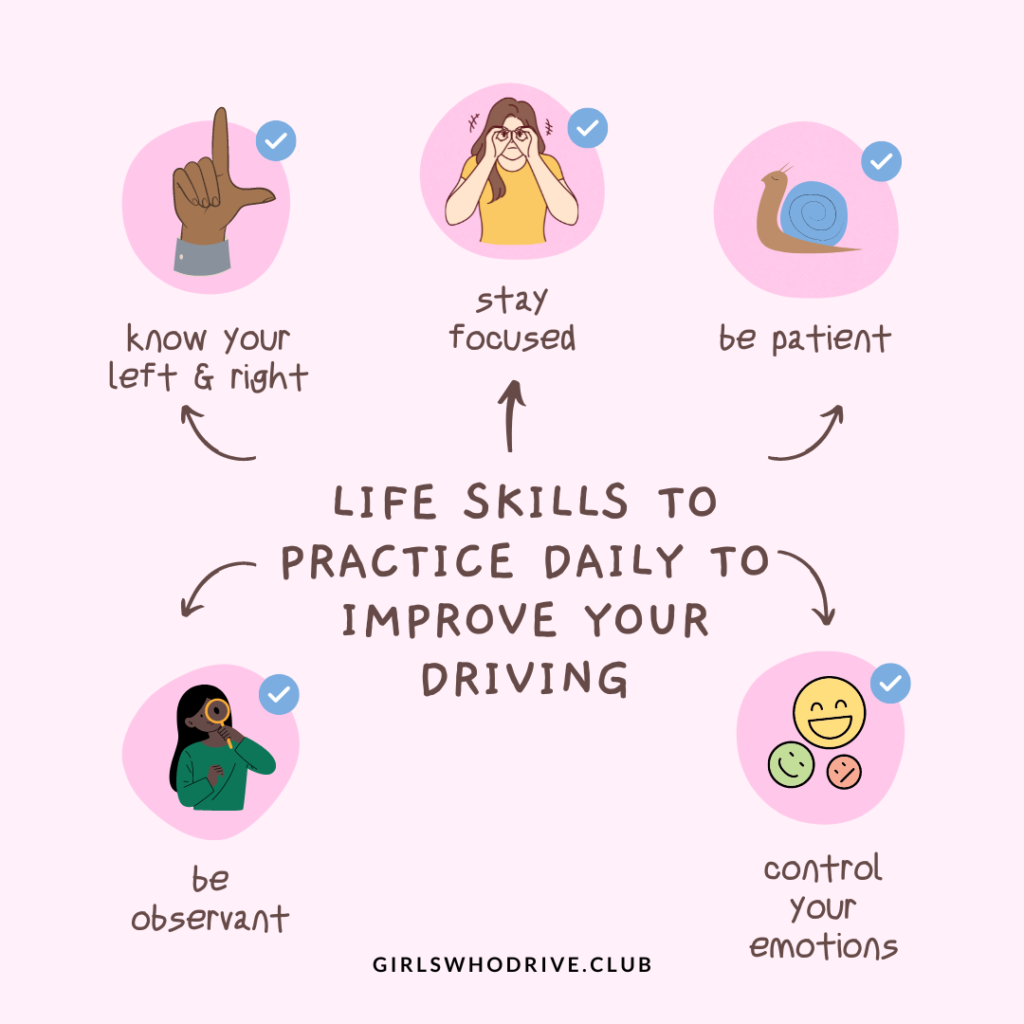
Believe it or not, there are 5 simple life skills and habits that can make you a better driver, and you’re probably already using them.
Curious yet?
Life Skills And Habits To Improve Your Driving Skills
1. Directionality (a.k.a Knowing Your Left and Right)
It seems simple, but you’d be surprised how many people don’t have this skill.
Maybe you’re one of those.
There’s no shame in that; we all get it mixed up sometimes!
However, if you want to be a really good driver, being able to distinguish your left and right is absolutely crucial.
Imagine taking the next right when your GPS (or driving instructor) said to take a left!
How To Figure Out Which Is Left and Which Is Right
If you are not sure which way is left and right, there are a couple of simple tricks that can help.
I. Use your hands
One of the easiest ways to figure it out is to think about which hand you write with. It might be helpful to visualize yourself writing on a piece of paper.
If you’re right-handed, your writing hand is your right side, and the other is your left.
If you’re left-handed, your writing hand is your left side, and the other is your right.
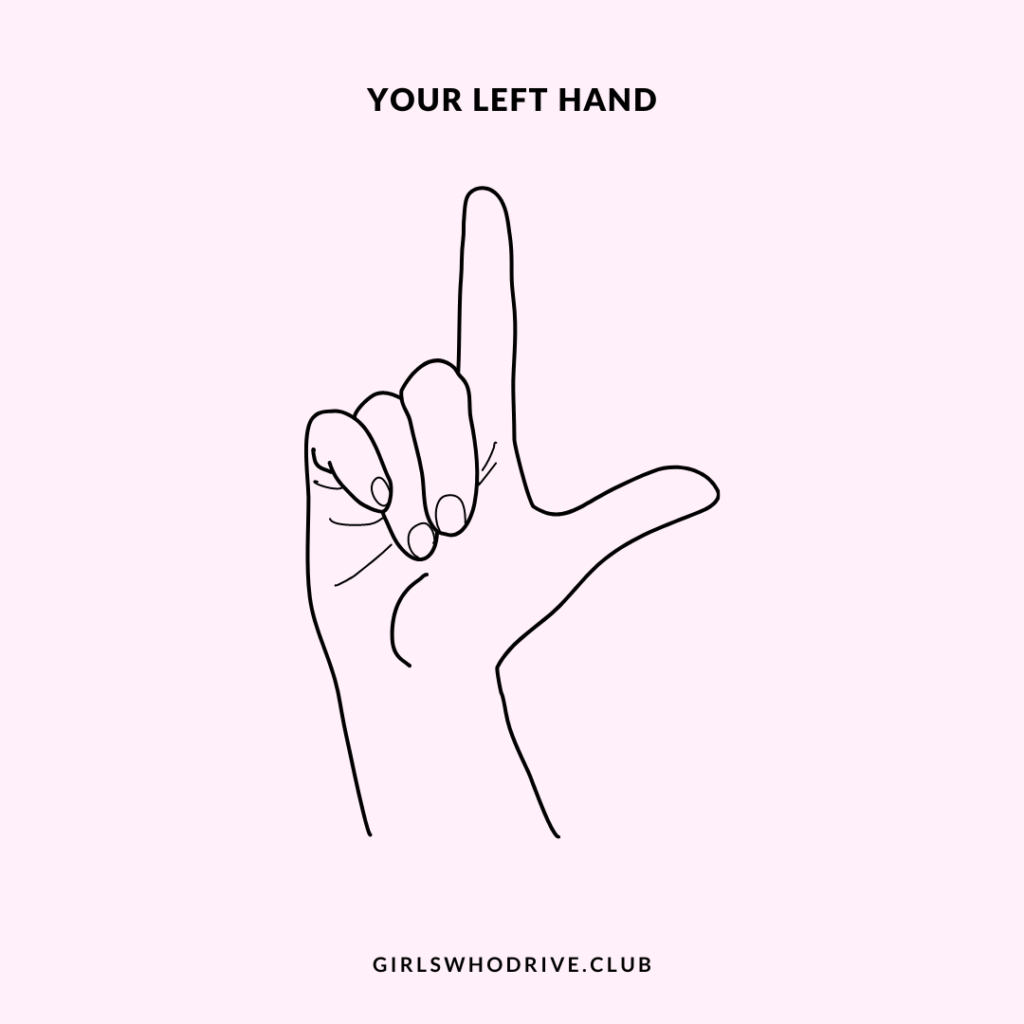
II. The Letter L
Another trick is to make the letter “L” with your fingers.
If it looks like a normal “L,” that is your left hand.
If your “L” looks flipped, that is your right hand.

III. Use landmarks
Using landmarks is another simple trick you can use anytime.
Use something familiar as a reference point. For example, a tree you pass often.
Just remember if it’s on your left or right, and picture it when you need help.
IV. Use labels
Mark your hands with a pen or eyeliner to remind yourself which side is left and right.
You can also place a small note near your steering wheel as a quick reference.
It might feel a little silly, but it works — and you won’t need it forever.
V. Accessorise
This last trick is a subtle but effective way to learn your left and right.
If you wear accessories, use them as a guide.
A ring can mark your left hand, or a bracelet can mark your right. No one will notice, and you can rely on it until you no longer need it.
2. Being Observant
Are you someone who notices little things, like a new hairstyle or furniture being moved?
Or do you miss it until someone says something?
That kind of awareness matters more than you think, especially when driving.
Being observant means noticing what’s happening around you and spotting hazards early.
When driving, this could look like:
- a ball rolling into the road (a child may follow)
- a car stopping suddenly or using hazard lights
- new road signs
- obstructions ahead
- emergency sirens
The benefits of being observant while driving are obvious — the more observant you are, the safer you’ll be on the road.
3. Being Patient
No one likes long lines, slow walkers, or waiting weeks for a package, but it’s part of life.
The good news is that patience gives you an advantage.
If you struggle with impatience, traffic, and slow drivers can push you into risky decisions. On the other hand, learning to be patient behind the wheel helps you stay calm and avoid accidents.
Here’s the catch:
Real patience doesn’t start in your car.
It starts with your loved ones, your coworkers or classmates, and even strangers you meet.
4. Staying Focused
Similarly, if you struggle to focus in everyday life, you’ll likely struggle with it while driving too.
Focus is critical behind the wheel as even a brief lapse in attention can lead to an accident.
If staying focused is a challenge, try improving one of these areas:
- Exercise (at least 30 minutes daily or 150 minutes per week)
- Sleep (7 – 8 hours, ideally before midnight)
- Diet (balanced, protein + healthy fats + complex carbs)
- Stress management (deep breathing, short walks, journaling)
- Hydration (about 0.5 – 1 oz of water per lb of body weight daily)
Exercise Improves Focus
Studies suggest that being physically active (especially doing cardio that improves fitness) can make it easier to pay attention and stay on task. People who exercise more often tend to focus better, ignore distractions more easily, and think a bit faster.Exercise may do this by strengthening brain areas involved in attention and self-control and by boosting brain chemicals (like BDNF) that support brain health and help brain cells communicate and adapt.
5. Controlling Your Emotions
Your emotions don’t stay at home; they follow you into the car, down the street, and all the way to your destination.
If you’re angry or frustrated, it can affect how you drive and lead to risky decisions.
That’s why staying calm behind the wheel is so important.
But it doesn’t start there.
If you can’t manage your emotions in everyday situations, it will be harder to do it while driving.
Take some time to work on your emotional regulation skills and practice calming down when you are feeling upset.
Getting enough sleep, praying, saying affirmations, and meditation are simple ways to start.
Let's Calm Down
Conclusion
You don’t have to be in the driver’s seat to improve your driving skills.
By mastering these five everyday skills and habits, you are guaranteed to become a safer and more confident driver.
You can start right now!
Was this post helpful?
Girls Who Drive — Community Verified